
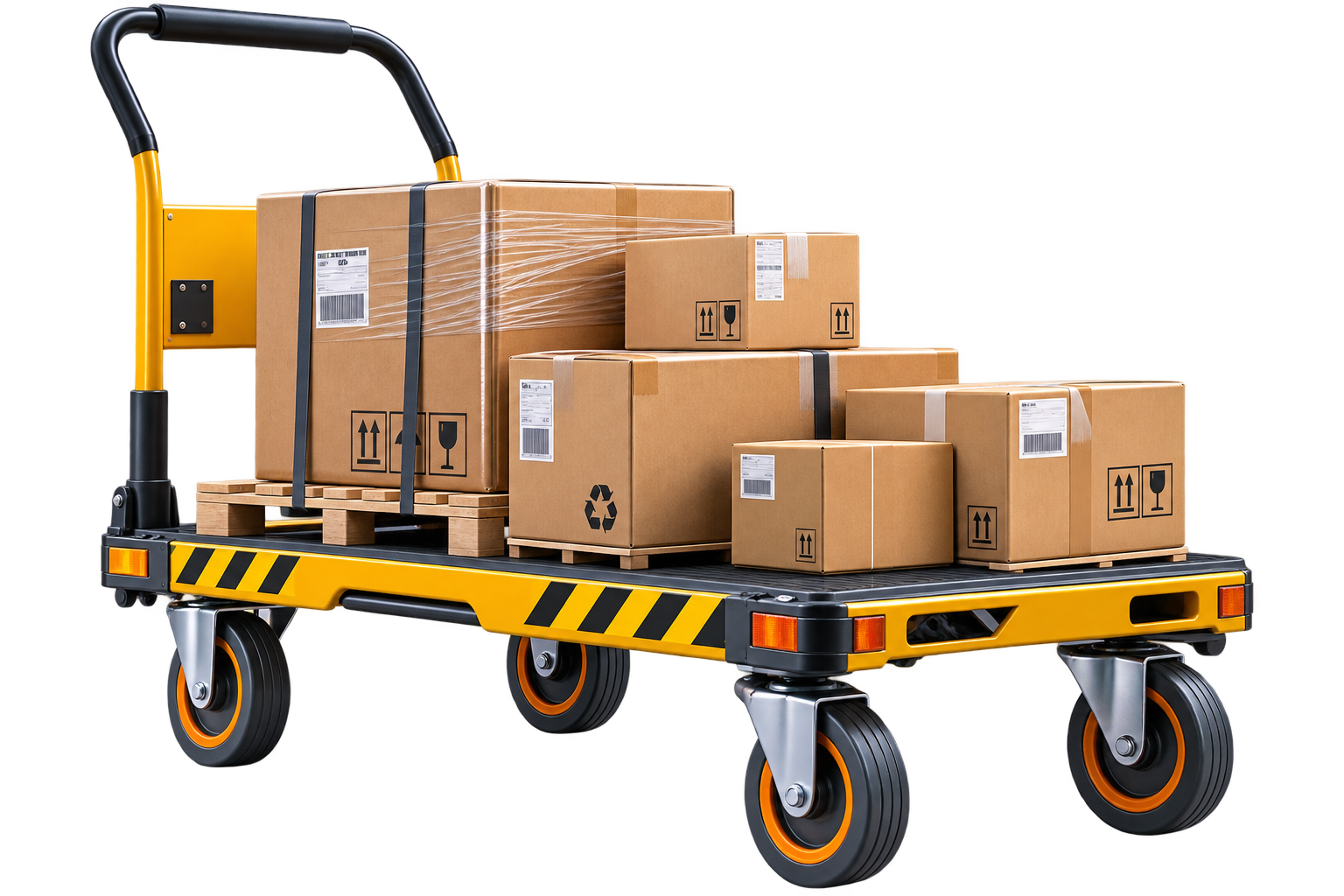
A Warehouse Management System (WMS) is software that helps businesses manage warehouse operations, inventory movement, order fulfillment and stock visibility in real time. It improves warehouse accuracy, speeds up shipping and helps companies reduce operational costs while managing inventory more efficiently.
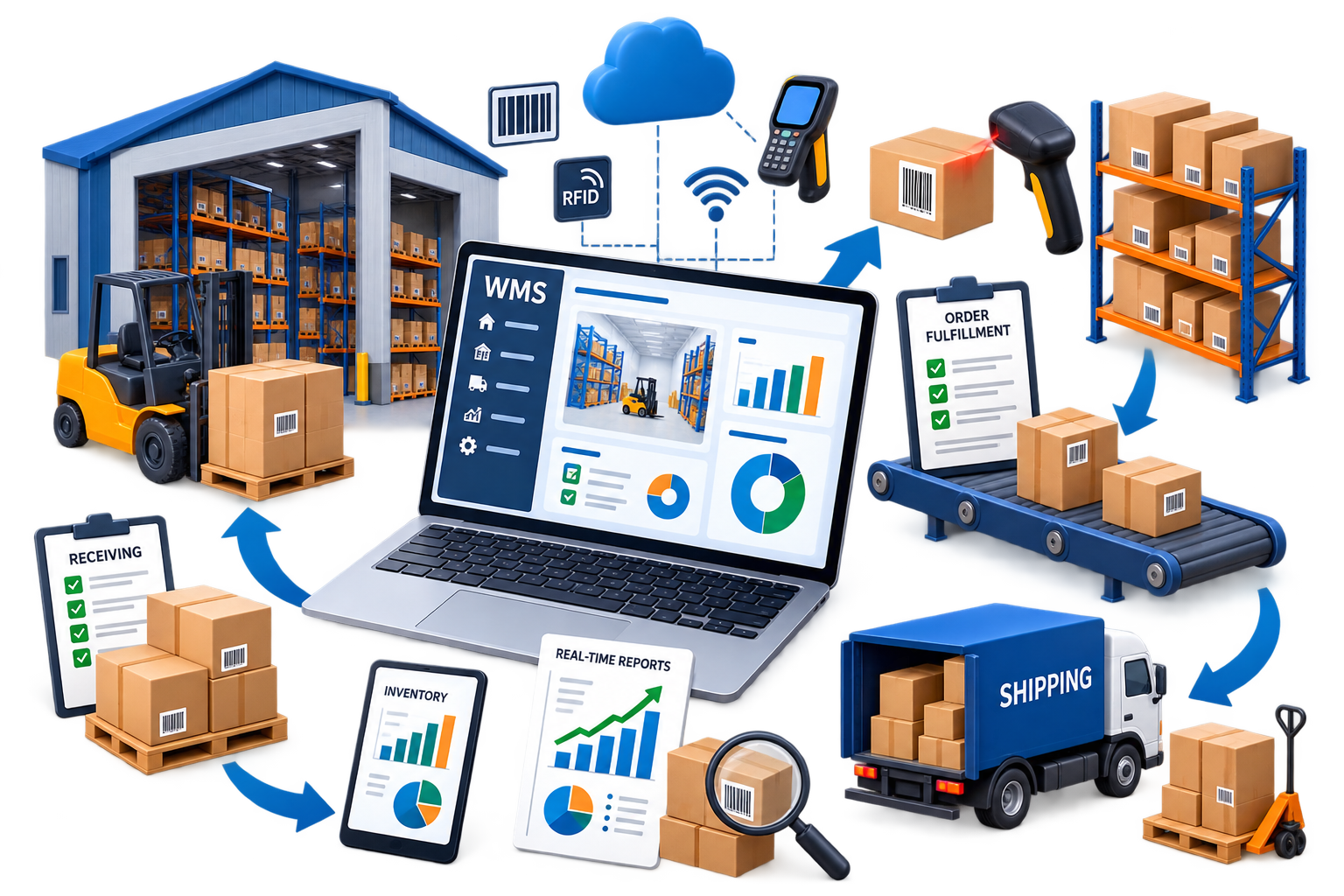
Modern warehouse management software helps businesses control everything from receiving goods to final dispatch using automation, barcode scanning, RFID tracking and real-time reporting.
WMS in short: A warehouse management system is software that manages every activity within warehouse operations and continuously helps improve how those activities are performed.
Get a Call back
Customer expectations for fast, accurate order fulfillment have never been higher. The global WMS market is projected to reach US$7.90 billion by 2027, growing at a CAGR of 9.2%. For businesses that want to stay competitive in logistics, a WMS is no longer optional; it is essential.
What Does a WMS Do?
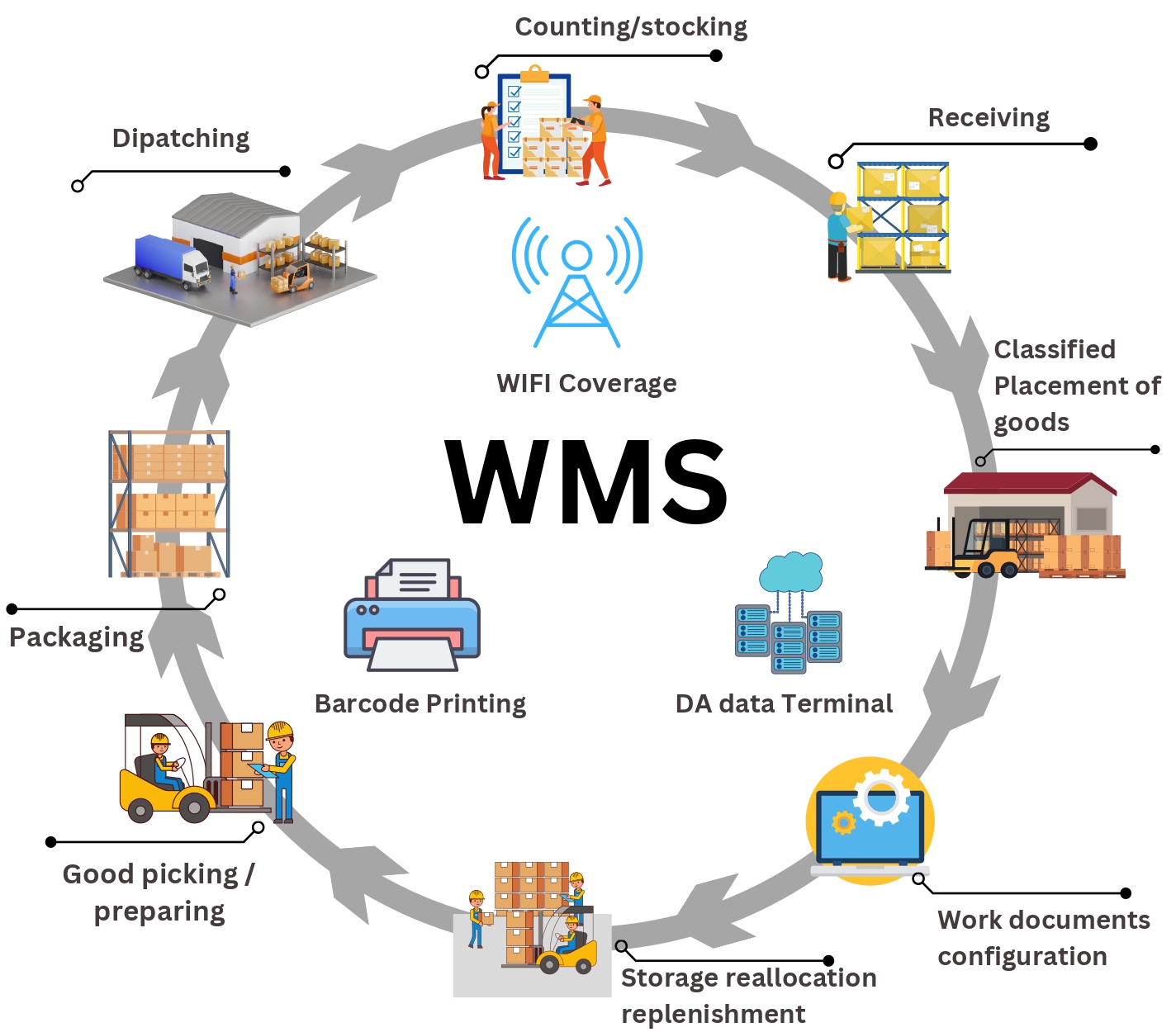
A WMS manages the full flow of warehouse activity, from inbound workflows through to outbound dispatch.
Here is what a WMS typically handles:
Inventory Management:
A WMS provides continuous, real-time insight into inventory levels and locations using automatic identification and data capture (AIDC) technologies like RFID and barcodes. Many modern systems also support demand forecasting and cycle counting, so warehouses can adjust stock levels proactively, leading to greater order accuracy and reduced holding costs.
Warehouse Layout and Slotting:
The WMS recommends bin slotting and storage configurations to maximize space utilization while accounting for seasonal inventory changes. Organizations can set picking logic, customize workflows and directly influence warehouse layout through the system. All of these has a direct impact on how efficiently goods move through the facility.
Order Picking, Packing and Fulfillment:
Order picking typically accounts for 55% of total warehousing costs. A WMS guides decision-makers toward the fastest, least expensive paths for storing and retrieving products. This includes support for:Pick-to-light and pick-to-voice technologiesWave picking, zone picking and batch pickingCross-docking, put-to-order and put-wall systemsLot zoning and task interleaving for maximum efficiency.
Shipping:
Most WMS platforms integrate with ERP systems, transportation management systems (TMS) and logistics software. This allows the WMS to automatically generate packing lists, shipment invoices, bills of lading and shipment notifications. Live order status updates allow packages to be monitored from dispatch to delivery.
Labor Management:
The WMS tracks labor statistics including response times, labor costs, productivity gaps and workforce trends. Task interleaving features minimize worker travel time by planning and scheduling tasks based on priority or proximity.
Yard and Dock Management:
Yard and dock management features guide truck drivers to the correct loading docks quickly. The WMS is also built for cross-docking scenarios, where arriving goods are immediately placed into outgoing shipments. It handles route configuration, material validation and exception management for both inbound and outbound logistics.
Reporting and Analytics:
The WMS automatically collects operational data, eliminating manual entry errors and accelerating reporting. Key performance indicators typically tracked include:Distribution costsOrder cycle timeInventory accuracyOn-time shipping ratesOrder fill ratesThe WMS can also generate visual reports for communicating performance data to stakeholders.
History of Warehouse Management Systems:
Warehouse operations used to run on manual tallying: paper logs, physical counts and a lot of institutional memory. Errors were common and visibility stopped at whatever a supervisor could see from the floor. The introduction of barcodes in 1974 enabled warehouses to identify and track items electronically, reducing manual data entry and errors.
By the 1980s and 90s, dedicated WMS platforms emerged to manage processes such as receiving, putaway and picking. However, these systems typically ran on local servers and required in-house IT support. Cloud computing transformed WMS in the 2000s and 2010s, making systems accessible from anywhere while simplifying updates, maintenance and scaling.
Today’s WMS platforms go further with real-time RFID tracking, AI-assisted forecasting and integrations with marketplaces such as Amazon, Flipkart and ONDC. PALMS™ WMS represents this newer generation, offering cloud-based warehouse management designed for multi-warehouse operations.
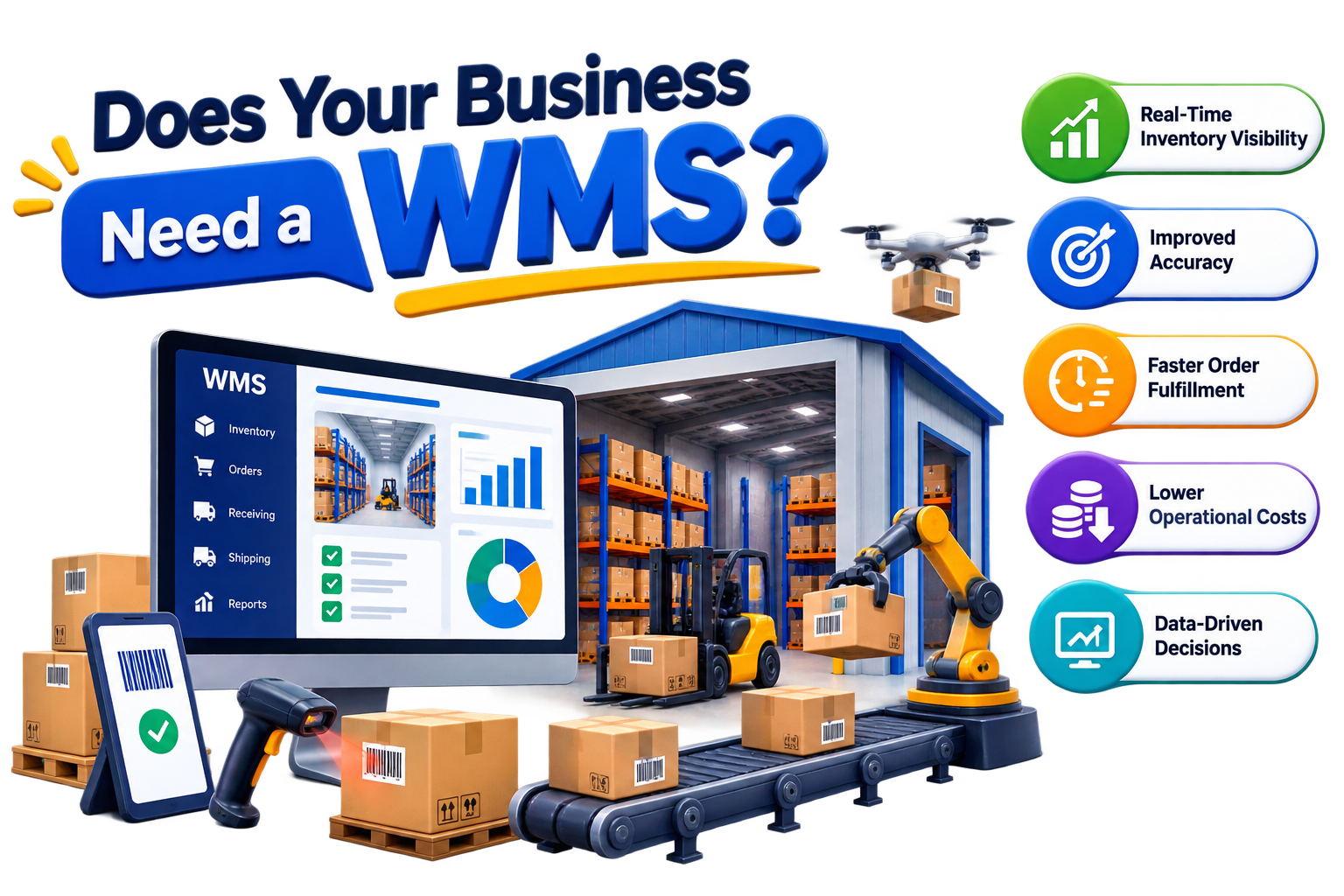
A WMS delivers improvements across every layer of warehouse operations. Here is what businesses gain:
Optimized Inventory Management
Real-time inventory tracking drastically reduces the risk of stockouts and overstocking. Businesses maintain optimal stock levels, fulfill orders more efficiently and lower holding costs.
Faster, More Accurate Order Fulfillment
Automating picking, packing and shipping eliminates manual errors, speeds up order processing and improves customer satisfaction. Real-time order status visibility also enables accurate delivery estimates.Fewer Errors Across the BoardBarcode and RFID scanning automate data capture and entry, preventing shipping mistakes and saving time and money.
Better Space Utilization
WMS provides insights into warehouse layout and product placement, helping businesses maximize storage capacity and reduce the need for additional facilities.
Higher Labor Productivity
Automated processes reduce reliance on manual labor, allowing staff to focus on higher-value tasks. This improves overall efficiency and reduces the chance of human error.
Accurate Demand Forecasting
By analyzing historical data and current trends, the WMS supports demand forecasting, helping businesses anticipate fluctuations, plan replenishments and reduce excess inventory costs.
Efficient Returns Management
A WMS provides visibility into returned items, automates restocking procedures and ensures returned products are processed correctly, keeping customer satisfaction high.
Regulatory Compliance and Traceability
For regulated industries like pharmaceuticals and food, a WMS tracks batch numbers, expiration dates and other critical information — maintaining compliance and reducing the risk of penalties.
Stronger Supplier Collaboration
Many WMS platforms integrate with supplier systems, enabling seamless communication for timely replenishment, order updates and efficient inbound logistics.
Data-Driven Decision Making
The WMS generates rich operational data. Analyzing this data helps businesses identify bottlenecks, spot trends and continuously improve warehouse performance.
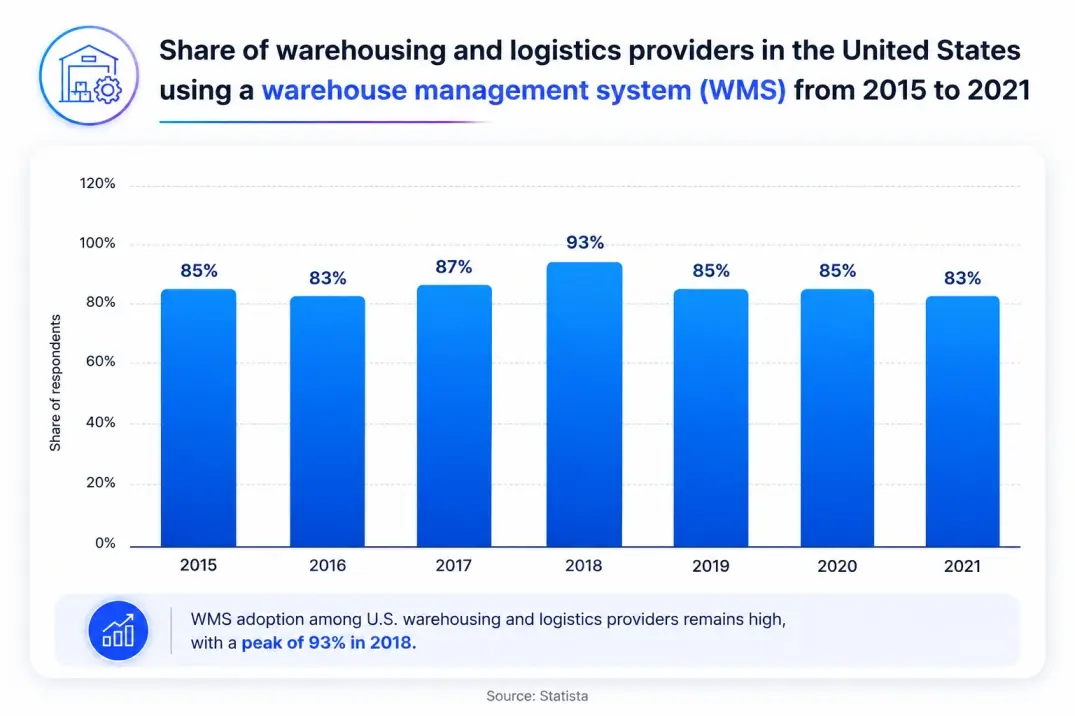
Types of Warehouse Management
Warehouse management and a warehouse management system are related but not the same thing.
Warehouse management is the overall discipline of managing warehouse operations, including processes, people and decisions. Warehouse Management System (WMS) is the software that supports and automates warehouse management activities.
Here’s a quick comparison of the two highlighting the key differences.
What is a Warehouse Management System?
A WMS is software that streamlines all aspects of warehouse operations, including receiving, storage, picking, packing, shipping and billing. It provides real-time inventory visibility and data analytics to improve warehouse throughput and reduce costs. It also integrates with other software solutions and automation tools.
What is the purpose of a WMS?
A WMS serves as the singular platform for managing multiple warehouse locations and all aspects of warehouse activity: receiving, putaway, location suggestion, inventory tracking, shipping and billing. Its purpose is to ensure operations run in the most efficient and cost-effective way possible.
What are the main components of a WMS?
The core modules are: the inventory management module, the receiving module, the order fulfillment module and the shipping module.
What are the main features of a WMS?
Core WMS features include inventory tracking, barcode scanning, order picking, warehouse slotting, shipping integration and reporting.
What are the benefits of warehouse management software?
Warehouse management software improves inventory visibility, speeds up fulfillment, reduces errors and increases warehouse productivity.
What industries use warehouse management systems?
Industries including retail, manufacturing, e-commerce, logistics, pharmaceuticals and food distribution use WMS platforms.
What is cloud-based WMS?
A cloud-based WMS is hosted online and delivered as Software-as-a-Service (SaaS), allowing businesses to access warehouse operations remotely.
Can small businesses use a WMS?
Yes. Small and mid-sized businesses use cloud-based WMS platforms to improve inventory management and warehouse efficiency without large infrastructure investments.
How does a WMS improve inventory accuracy?
A WMS uses barcode scanning, RFID tracking and real-time inventory updates to reduce manual errors and maintain accurate stock records.
What is the best warehouse management software?
The best warehouse management software depends on business size, industry requirements, warehouse complexity and integration needs. Solutions like PALMS™ WMS offer advanced warehouse automation and real-time inventory management for modern supply chain operations.
What are the four types of warehouse management systems?
Standalone WMS, cloud-based WMS, supply chain execution modules and integrated ERP systems, classified by deployment method and primary functionality.
How do I choose the right WMS for my business?
Start with your industry requirements and the features most critical to your operations. Define your budget, evaluate deployment options and work with potential providers to understand what customizations are available for your specific warehouse needs.
What is the difference between a WMS and an ERP?
An ERP is a broad enterprise platform covering finance, HR, procurement and more. It may include basic warehouse modules, but a dedicated WMS offers far deeper warehouse-specific functionality — granular inventory control, advanced picking logic, labor tracking and real-time operational visibility that ERP warehouse modules typically cannot match.
PALMS™ is trusted by leading businesses across industries as one of the top warehouse management systems, delivering advanced automation and digital capabilities.

Technoforte empowers enterprises with innovative digital solutions that drive efficiency and growth. From Digital Transformation and Business Analytics to AI-driven insights, PALMS™ Smart WMS and Smart Mobility, we help businesses build agile, data-driven, and future-ready operations.